AI-assisted coding has sparked excitement, anxiety, and more than a little confusion. The loudest takes tend to swing between two extremes: either AI will magically build everything for everyone, or it will flatten human work into irrelevance. Reality, as usual, is less dramatic and more useful. Vibe coding is best understood as a new entry point into software creation--one that can be empowering for beginners, productive for experienced builders, and risky when used without judgment.
At its best, vibe coding lets people describe what they want in natural language, generate a starting point with AI, and learn by iterating. That lowers the emotional barrier to beginning. For many people, the hardest part of coding has never been syntax; it has been the sense that the field is sealed off behind years of technical fluency. AI changes that first step.
But the tool is not the same as understanding. The value of vibe coding does not come from blindly accepting generated output. It comes from using AI as a collaborative draft partner while keeping human curiosity, verification, taste, and accountability firmly in the driver`s seat.
What people mean by "vibe coding"
The phrase came into wider use after Andrej Karpathy described a style of building in which a person leans heavily on AI to generate and revise code through conversation.1 Since then, the term has taken on a broader public meaning: using AI to help create software quickly, intuitively, and often without the traditional front-loaded learning curve.2
That public impression matters. For many newcomers, vibe coding feels less like "becoming a programmer" and more like finally being allowed to participate. It turns software from a guarded specialty into something more exploratory and conversational. That shift is powerful--especially for people who have ideas, workflows, or small business needs but no formal coding background.
Why it can be an excellent learning tool for non-coders
1) It removes the intimidation tax
AI-assisted coding can turn a blank page into a starting point. Instead of freezing over file structure, syntax, and setup, a beginner can begin with intent: "I want a page that does this," or "Help me make a calculator for that." Once the first version exists, learning becomes concrete. People are no longer trying to memorize abstract rules in a vacuum; they are responding to something visible and editable.
2) It supports experiential learning
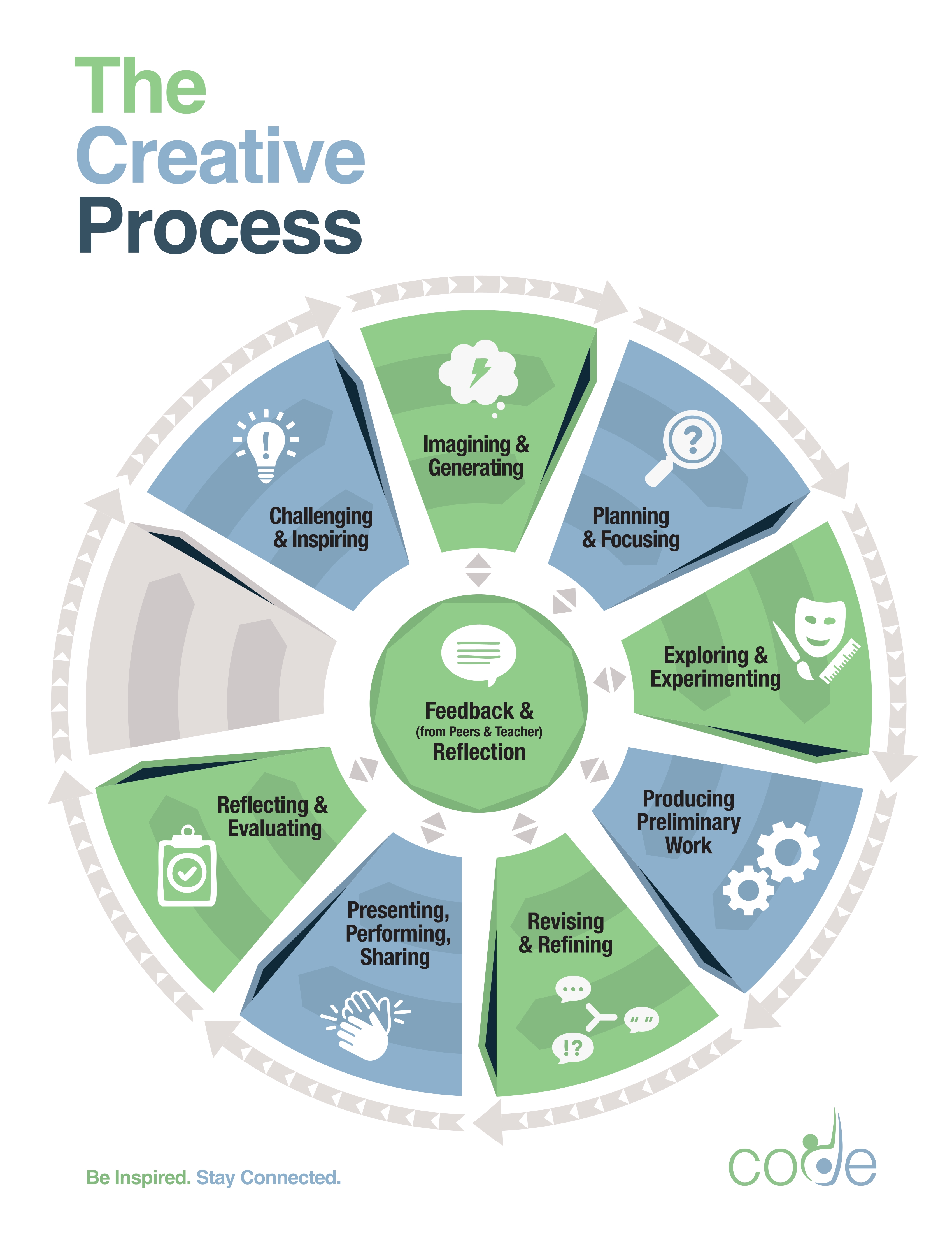
Educational theory has long emphasized that knowledge deepens through active experience, reflection, and adjustment. David Kolb`s experiential learning model is a useful frame here: people learn by doing, noticing results, and refining their understanding through repeated cycles.3 That rhythm maps surprisingly well to AI-assisted building. Prompt, test, inspect, revise. It is messy, but it is alive.
3) It gives immediate feedback
One reason traditional learning can stall is that beginners often wait too long to see any payoff. AI shortens that loop. You can ask for a prototype, compare outputs, and inspect changes almost immediately. That kind of rapid feedback can boost confidence and sustain motivation--two things that matter more than many people admit.
4) It creates room for creative people who do not think of themselves as "technical"
Designers, writers, artists, operations staff, entrepreneurs, and curious tinkerers often have highly specific ideas they want to test. Vibe coding gives those people a practical bridge into software. It does not erase the need for engineering skill; it simply broadens who gets to start experimenting.
Used well, vibe coding is not a replacement for learning fundamentals. It is a more inviting doorway into them.
The golden rule: trust, but verify
This is where the grown-up version of the conversation begins. AI can be genuinely helpful and still be wrong. It can produce convincing nonsense, insecure patterns, obsolete syntax, and solutions that appear functional until they hit a real-world edge case. OpenAI`s documentation explicitly emphasizes accuracy and reliability tradeoffs in model use, and GitHub`s own research frames AI coding tools as helpful accelerators rather than substitutes for human oversight.45
That means beginners need a simple working discipline:
- Run the code and observe what it actually does.
- Ask the AI to explain unfamiliar parts in plain language.
- Cross-check sensitive claims or implementation details with reliable documentation.
- Expect to edit, debug, and sometimes throw out sections.
In other words: vibe coding works best when it stays collaborative, not passive.
- "Explain this line like I`m brand new."
- "What are three ways this could break?"
- "What part of this is doing the real work?"
- "What should I test before I trust this?"
- You are pasting code you cannot describe.
- You cannot tell whether the output is correct.
- You are handling personal, financial, or health data without review.
- You are deploying something important because it "looked fine."
What are the limitations of vibe coding?
It can create shallow understanding
When AI does too much of the thinking, a user can mistake motion for mastery. A project may seem successful because it runs, while the builder remains unable to debug it, adapt it, or evaluate whether the approach makes sense. That is not a moral failure; it is just a sign that a shortcut has become a crutch.
It can produce fragile or insecure code
Security concerns around AI-generated code are not hypothetical. The public conversation has increasingly focused on the risk of inexperienced users generating software that works just well enough to be dangerous. Recent warnings from the UK`s National Cyber Security Centre, reported by IT Pro, highlighted concerns that AI-generated code can introduce vulnerabilities and maintenance risks when used carelessly.6 That does not mean all AI-generated code is bad. It means confidence should never replace review.
It can blur responsibility
When something breaks, someone still owns the outcome. AI does not carry the ethical or operational burden of a decision. Humans do. That matters in workplaces, nonprofits, small businesses, and any system touching real people.
It is often weaker in complex production environments
Large applications require architecture, security planning, data modeling, testing discipline, maintainability, and collaboration across teams. AI can absolutely help with parts of that work, but "just vibe it into production" is not a strategy. It is a bug report waiting to happen.
When vibe coding is not a good idea
There are situations where the cost of being wrong is too high:
- medical or health-related systems,
- financial systems handling transactions or sensitive data,
- security-critical tools, authentication flows, or access control,
- legal or compliance-heavy workflows,
- large production systems that multiple people must maintain.
In those cases, AI may still be useful for brainstorming, scaffolding, or drafting test cases, but it should sit inside a mature engineering process--not replace one.
Why vibe coding can reduce fear about AI "taking all the jobs"
The fear is understandable. Whenever a new tool dramatically speeds up work, people worry that the tool itself will replace them. But vibe coding actually points in a more nuanced direction. What it reveals is not the disappearance of human value, but the changing shape of where that value lives.
AI can generate drafts, boilerplate, interface ideas, and code suggestions at astonishing speed. What it cannot do well on its own is define what matters, understand a team`s politics, weigh tradeoffs with empathy, sense what feels trustworthy to a user, or decide what is ethically acceptable in context. Stanford HAI consistently frames human-centered AI around augmentation rather than replacement, arguing that AI should be designed to enhance human capability and quality of life.78
That should not be read as a cheesy reassurance poster. Some jobs will change. Some workflows already have. But creativity, judgment, taste, communication, leadership, and responsibility remain stubbornly human. Vibe coding makes that visible: the AI may help produce the pieces, but the human still chooses the purpose, the standard, the tone, and the final shape of the thing.
Humanity still matters--possibly more than ever
Ironically, the more capable the tools become, the more obvious it is that human qualities are the differentiator. The people who will get the most from AI are not the ones who shut off their brains and let the machine spray code everywhere like a glitter cannon. They are the ones who:
- ask sharper questions,
- notice weak reasoning,
- care about users,
- bring original perspective,
- and know when "good enough for a prototype" is very different from "safe enough to trust."
That is why the best case for vibe coding is not that it removes humans from the process. It is that it lowers fear and expands participation while keeping human creativity at the center.
A balanced conclusion
Vibe coding deserves neither blind hype nor reflexive panic. It is a practical, imperfect, and often surprisingly effective way to begin building. For newcomers, it can turn intimidation into action. For experienced developers, it can accelerate rough drafts and reduce repetitive work. For everyone, it offers a useful reminder: tools can change the pace of creation without erasing the need for human judgment.
The honest promise of vibe coding is not that nobody needs to learn anymore. It is that more people can start learning by making something real.
AI can help people start faster. It still takes a human to decide what is worth building, what is safe to trust, and what kind of work carries meaning.
- Andrej Karpathy, post describing "vibe coding," February 2025. x.com/karpathy/status/1886192184808149383
- Google Cloud, "What is vibe coding?" updated March 20, 2026. cloud.google.com/discover/what-is-vibe-coding
- Simply Psychology, overview of David Kolb`s experiential learning cycle, citing Kolb (1984). simplypsychology.org/learning-kolb.html
- OpenAI API documentation, "Reasoning best practices." developers.openai.com/api/docs/guides/reasoning-best-practices/
- GitHub Research, "Quantifying GitHub Copilot`s impact on developer productivity and happiness," September 2022. github.blog/news-insights/research/research-quantifying-github-copilots-impact-on-developer-productivity-and-happiness/
- IT Pro, reporting on UK NCSC warnings about risks from vibe coding, March 2026. itpro.com/security/ncsc-warns-vibe-coding-poses-a-major-risk
- Stanford HAI homepage mission statement on collaborative, augmentative AI. hai.stanford.edu
- Stanford HAI, "Enhance, not Replace: AI`s Potential to Make Our Work and Lives Better," February 2021. hai.stanford.edu/news/enhance-not-replace-ais-potential-make-our-work-and-lives-better